


Dad Pregnancy Guide: Daddy Up
4.9384.00 Reviews
App Specs
- Version
- 2.28.4
- Updated On
- License
- Free
- Downloads
- 100,000+
- Developer
- Sycamore Spur
- Categories
- Parenting
- Platform
- Android
Screenshots





 Analysis by AppCompare
Pregnancy apps often speak directly to the person carrying the baby, while the partner is left searching for a practical way to understand what is happening and how to help. Dad Pregnancy Guide: Daddy Up takes a different route. It is a free parenting app from Sycamore Spur built around the father or partner’s side of pregnancy, with a tone that feels more approachable than clinical. I found it most useful as a companion for staying involved between appointments, not as a replacement for medical advice.
The app has a strong reputation, with a 4.9 average from around 2.2K ratings and more than 100K installs. That does not automatically make it right for everyone, but it does match my overall impression: this is a focused, friendly tool for someone who wants guidance without opening a dense medical reference every time a new question comes up.
From feeling unprepared to having a simple pregnancy routine
The starting condition is familiar. You know pregnancy is important, you want to support your partner, and yet the information arrives in fragments: an appointment here, a symptom there, a new decision to discuss, and plenty of advice from family, friends, and the internet. The challenge is not always finding information. It is knowing what matters to you right now and turning it into something useful at home.
That is where this app’s point of view helps. Instead of presenting pregnancy only as a sequence of medical milestones, it frames the experience as something a dad or partner can actively participate in. I liked that emphasis because it changes the question from “What is happening to the baby?” to “What can I understand, notice, discuss, or do today?”
The app is listed for Everyone 10+, which fits its accessible approach. It is not written like a specialist textbook, and that makes it easier to open during a short break or while sitting beside your partner. At the same time, the subject is serious, so I would still treat its guidance as general support. Any urgent symptom, worrying change, or personal medical decision belongs with a qualified healthcare professional.
Setting up a useful starting point
My advice is to begin with a clear purpose rather than trying to consume everything at once. Use it if you want to understand the pregnancy timeline, find a more active role in day-to-day support, or make conversations with your partner less one-sided. Those goals give the app a job to do. Without one, it can become another feed that you glance through and forget.
A practical first session is short: look through the current stage, note the topics that seem relevant, and then close the app before turning the experience into homework. The strongest benefit comes from connecting what you read to a real conversation. For example, if a topic raises questions about rest, appointments, preparation, or emotional support, bring that topic to your partner instead of assuming the app has settled the matter.
Worth Reading Before You Choose

EA SPORTS FC Mobile 26 Is a Bigger Football Game, but It Takes Time

Flipboard Shows What News Apps Must Do Beyond the Feed

Switching to Android Auto Means Rethinking Your Driving Routine

Google Calendar Makes a Crowded Week Easier to Manage

Ludo King Makes the Most of the Minutes Between Plans

Baby Panda World Brings Quick Play to Modern Phones, but Its Game Library Feels Busy
This is also a good place to decide whether the tone suits you. Some people want detailed clinical explanations, while others need a friendly nudge that makes participation feel less intimidating. Daddy Up is better suited to the second group. If your main requirement is an exhaustive medical encyclopedia, a hospital resource or a clinician’s advice will be a better primary source.
Following the flow one small step at a time
The most natural workflow is to move through the pregnancy guidance in order, then pause whenever something connects with your household. I would not treat every entry as a task that must be completed. Instead, use the app as a prompt system: read the current material, identify one useful takeaway, and decide whether it leads to an action or a question.
That action might be as simple as asking how your partner is feeling before offering solutions. It might mean taking responsibility for a practical chore, remembering an upcoming discussion, or making time to attend an appointment when your partner wants company. The value is not in collecting information. It is in reducing the distance between knowing and helping.
One non-obvious advantage of a dad-focused guide is that it can expose the invisible work surrounding pregnancy. Support is not limited to buying equipment or being present at major events. It includes noticing fatigue, avoiding the habit of making every conversation about the baby, and understanding that the same suggestion may feel helpful one day and irritating the next. A partner guide can make those small adjustments easier to see.
I also found it useful to read ahead selectively. Looking slightly beyond the current stage can help you recognize the kinds of conversations that may be approaching, but reading too far ahead can create unnecessary worry. My preferred method is to stay anchored in the present and use future material only when there is a clear reason, such as preparing for an appointment or discussing household plans.
Turning information into a shared handoff
The handoff between the app and real life is the most important part of the experience. The app can give you language and context, but your partner’s experience remains personal. I would avoid opening a topic with “the app says we should…” That can sound like you are outsourcing the relationship to a screen. A better handoff is “I read something related to this; how does it fit with what you are feeling?”
This approach matters because pregnancy information is not a script. Two people can be at a similar point in pregnancy and need completely different kinds of support. One partner may want practical help, another may want quiet, and another may want to talk through every possibility. The app works best when it starts a conversation rather than ending one.
There is a second handoff too: from general guidance to professional care. If something sounds worrying, the correct next step is not to search for reassurance inside the app. Write down the question, share it clearly, and contact the appropriate healthcare provider. That boundary is easy to forget when an app is convenient, so I consider it part of using Daddy Up responsibly.
For couples who do not live together, the workflow can still work, but it requires more deliberate sharing. A short message about one useful topic may be welcome; sending a stream of advice may feel like pressure. I would use the app to improve the quality of your support, not to prove that you are keeping score of every pregnancy detail.
A realistic evening with the app
Imagine coming home after work and finding that your partner has had a tiring day. The unhelpful response is to launch into a list of facts or ask a vague question such as “Do you need anything?” and then wait for instructions. A more useful routine is to check the relevant guidance beforehand, choose one practical way to help, and ask a specific question: would dinner, a quiet evening, help with a task, or company at the next appointment feel best?
The app does not perform that action for you, and that is exactly why the workflow matters. It gives you a way to arrive better prepared, but the result depends on listening. If your partner says the suggestion is not useful, that is not a failure of the app. It is information about the person in front of you, and you should adjust.
Another realistic use is appointment preparation. Before an appointment, use the guide to identify subjects you may want to discuss, then write down your own questions rather than relying on memory. During or after the visit, compare the professional advice with what you expected. This prevents the app from becoming the authority and turns it into a preparation aid.
What the workflow produces when it works
The best outcome is not that you can repeat pregnancy facts. It is that you become more dependable in ordinary moments. You notice what needs doing, ask better questions, and understand why your partner may need different support from one week to the next. That is a meaningful result for a parenting app aimed at dads.
I also think the app can reduce the awkwardness some men feel when they do not know how to participate. A guide written for fathers gives permission to start small. You do not need to pretend to understand everything immediately. You can use one topic as a bridge into a conversation and gradually build confidence through involvement.
The free price makes that first step easy, although optional in-app purchases range from $0.99 to $4.99 per item. I would begin with the free experience and only pay for something if it clearly supports the way you intend to use the app. The presence of purchases is not a reason to reject it, but it does mean the app is not identical to a completely purchase-free resource.
Its current version is 2.28.4, and the app supports devices running Android 8.0 or later. For someone using an older phone, compatibility should be checked before building a routine around it. On a supported device, the relatively focused purpose is a strength: you are not navigating a huge general parenting platform before reaching the material relevant to pregnancy.
Where the flow becomes less comfortable
The first point of friction is that a dad-centered perspective can be both its greatest strength and its narrowest limit. If you are the pregnant person looking for detailed symptom tracking, clinical monitoring, or a comprehensive record of appointments, this is unlikely to be the best main app. Its value comes from helping the partner engage, not from replacing tools designed around the patient’s medical needs.
The second limitation is emotional. A light or playful tone may make difficult subjects easier to approach, but it will not suit every user or every moment. Some readers may prefer a calmer, more neutral style, especially when dealing with anxiety or complicated circumstances. If the tone feels too casual for your situation, use the app only for general orientation and rely on professional support for anything sensitive.
There is also a risk of passive use. It is easy to read a guide and mistake that activity for support. A person can know the right vocabulary and still fail to help with dinner, listen properly, or attend an important conversation. I would measure the app by what changes after reading, not by how much content you have completed.
Another trade-off is simplicity versus depth. The approachable format lowers the barrier to entry, but users who want extensive citations, specialist explanations, or highly personalized medical interpretation may outgrow it quickly. In that situation, a clinician, prenatal class, or dedicated medical resource is a better companion. Daddy Up is most effective in the space between “I know nothing” and “I need specialist care.”
Who should make room for it
I would recommend it to a first-time dad or partner who wants a clear starting point, especially someone who feels involved emotionally but unsure what involvement looks like in practice. It is also useful for a busy partner who needs short prompts that can be turned into conversations and small acts of support rather than another demanding course to complete.
It may help couples who keep missing each other in conversation. Reading the same general topic separately can give both people a neutral opening, provided they then talk about how it applies to their own situation. The app is less useful for someone who already has a trusted, detailed care plan and wants only medical precision, or for anyone looking for a full family organizer rather than a pregnancy guide for dads.
My strongest tip is to create a simple three-part habit: read one relevant topic, turn it into one question for your partner, and follow it with one concrete action. That workflow keeps the app grounded. A second tip is to use it before appointments, not during moments of panic. A third is to treat disagreements between general guidance and personal medical advice as a reason to ask a professional, never as a challenge to solve through more scrolling.
My recommendation after using it as a partner’s guide
Daddy Up works best when it turns uncertainty into participation. It gives dads and partners a welcoming way to approach pregnancy, and its free entry point makes experimenting with that routine straightforward. The high average rating and broad install base suggest that many users find the approach appealing, but my recommendation comes mainly from how well its focus fits a real household workflow.
I would keep it as a companion rather than a sole source of information. Use it to prepare, notice, ask, and help; then hand medical questions to the people responsible for care. If you want a dad-specific guide with an accessible voice, it is worth trying. If you need detailed clinical tracking, a patient-centered pregnancy app or professional advice will serve you better.
In the end, the app’s result is modest but valuable: it can help you show up with more awareness and fewer empty offers to help. That is not the whole pregnancy experience, but it is a useful place to begin, and it gives the partner a more active role without pretending that an app can replace communication, care, or medical judgment.
Pros
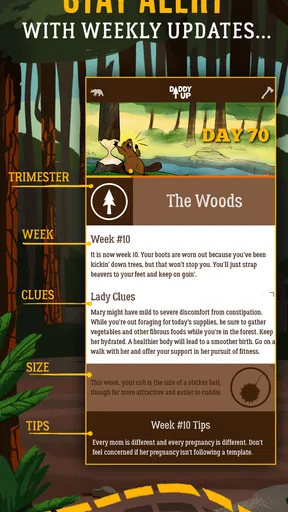
- Clear week-by-week guidance tailored specifically to expectant fathers.
- Includes practical tips for supporting a pregnant partner.
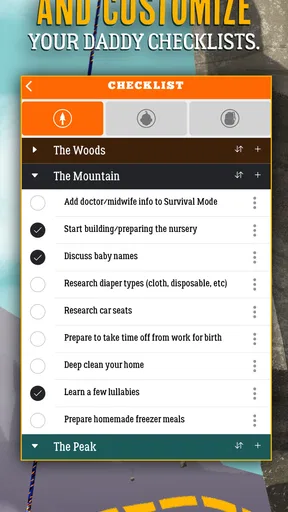
- Helpful checklists make appointments and preparations easier to manage.
- Friendly
- humorous tone keeps pregnancy information approachable.
- Useful milestone tracking helps dads stay involved throughout pregnancy.
Cons
- Some advice may feel too general for complicated pregnancies.
- Limited value for users seeking detailed medical information.
- Certain features may require payment or in-app purchases.
- Content may reflect traditional fatherhood roles and expectations.
- Reminders and tracking tools can become repetitive over time.
FAQs for Dad Pregnancy Guide: Daddy Up
What is Dad Pregnancy Guide: Daddy Up?
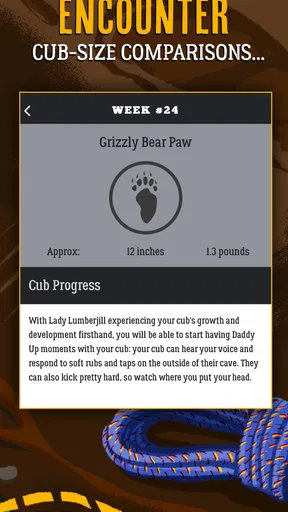
Dad Pregnancy Guide: Daddy Up is a pregnancy companion app designed specifically for expectant fathers. It provides week-by-week information about the baby’s development, changes during pregnancy, practical tips, reminders, and guidance on how partners can offer meaningful support. The tone is generally aimed at making pregnancy easier to understand for dads who may want straightforward, father-focused information rather than a traditional maternal pregnancy tracker.
What features does Dad Pregnancy Guide: Daddy Up include?
The app typically combines pregnancy education with practical tracking tools. Depending on the version and device, users may find weekly pregnancy updates, baby-development information, appointment or event reminders, notes, checklists, and suggestions for supporting a pregnant partner. Some content may also be presented in a humorous or informal style, which can make the experience feel less clinical and more approachable for first-time fathers.
Is Dad Pregnancy Guide: Daddy Up suitable for first-time fathers?
Yes, the app is mainly intended for men who want a simple introduction to pregnancy and fatherhood. Its week-by-week format helps explain what may be happening during each stage and offers ideas for being more involved. However, it should be viewed as an educational companion rather than a complete parenting course. First-time dads may still need advice from healthcare professionals, childbirth classes, books, and direct conversations with their partner.
Can Dad Pregnancy Guide: Daddy Up replace medical advice?
No. Dad Pregnancy Guide: Daddy Up should not be used to diagnose symptoms, make medical decisions, or replace advice from a doctor, midwife, or other qualified healthcare professional. Pregnancy experiences differ considerably, and information in an app may be general, abbreviated, or dependent on the version installed. If there are concerns about pain, bleeding, medication, fetal movement, appointments, or any other pregnancy-related issue, contact a healthcare provider promptly.
Is Dad Pregnancy Guide: Daddy Up free to download and available on Android or iPhone?
Availability, pricing, and included features can vary according to the platform, country, and current developer policy. The app may be offered as a free download with optional purchases, advertising, or premium content, so users should check the official Google Play Store or Apple App Store listing before installing. Reviewing the description, permissions, subscription details, privacy information, and recent user feedback is recommended before proceeding.


